
LASIK & Vision Correction: Which Is Better for You?
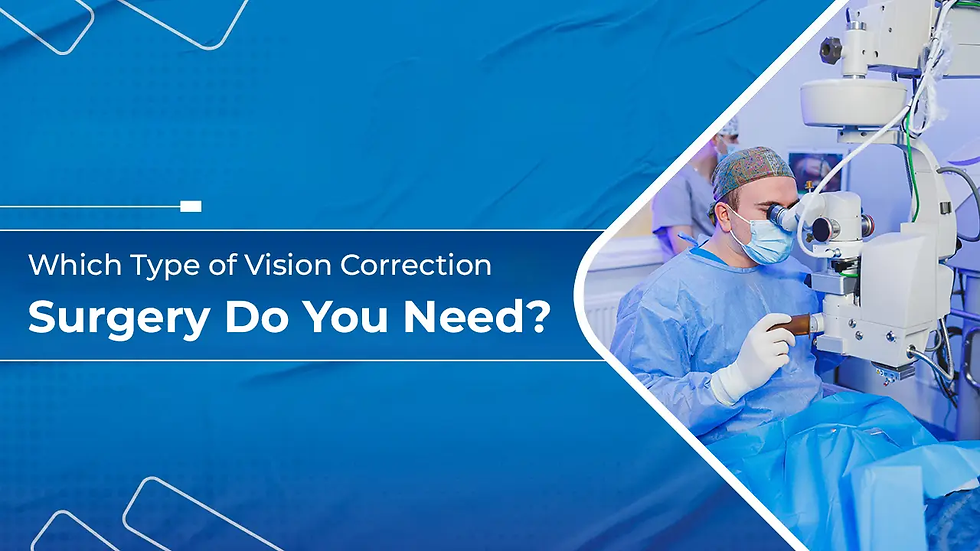
Clear vision is something most people take for granted until they start depending on glasses or contact lenses every day. Whether you have myopia, hyperopia, or astigmatism, modern eye care offers several ways to reduce or eliminate dependence on corrective lenses Among these options, LASIK is one of the most well-known and widely performed vision correction procedures But is LASIK always the best choice? Not necessarily. Depending on your eye health, corneal thickness, prescription, lifestyle, and personal expectations, another vision correction procedure such as SMILE, PRK, Contoura Vision, or ICL may be more suitable If you are searching for LASIK and vision correction, understanding the differences between these procedures can help you have a more informed discussion with your eye surgeon. The right procedure is not simply the one that is most popular; it is the one that is appropriate for your individual eyes
What Is LASIK and Vision Correction?
LASIK, or Laser-Assisted In Situ Keratomileusis, is a type of refractive eye surgery designed to correct common refractive errors. These include myopia, hyperopia, and astigmatism In a normal eye, light entering the eye is focused precisely on the retina, producing a clear image. When the shape of the cornea or the length of the eye causes light to focus incorrectly, vision becomes blurred. Glasses and contact lenses correct this problem by changing the way light enters the eye LASIK works differently. It uses a highly precise laser to reshape the cornea so that incoming light can focus more accurately on the retina. The goal is to improve uncorrected vision and reduce dependence on glasses or contact lenses.
LASIK is generally performed as an outpatient procedure, and the actual laser treatment is very quick. However, the total appointment involves preparation, detailed measurements, and postoperative instructions
Why Is LASIK So Popular?
LASIK has become a popular option for people who want freedom from glasses or contact lenses because it combines precision with relatively quick visual recovery For many suitable candidates, vision can improve significantly soon after surgery. Most patients can return to many normal activities relatively quickly, although the exact recovery period varies from person to person Another important advantage is the extensive clinical experience accumulated with modern laser vision correction. Advances in corneal mapping, laser technology, and surgical planning have made treatment increasingly personalized However, LASIK is not appropriate for everyone. A detailed preoperative evaluation is essential before deciding whether the procedure is suitable.
LASIK vs SMILE: Which Is Better?
SMILE, or Small Incision Lenticule Extraction, is another modern laser vision correction procedure. Unlike LASIK, SMILE does not create a traditional corneal flap. Instead, a small incision is used to remove a precisely created piece of corneal tissue called a lenticule SMILE is primarily used to correct myopia and can also treat certain cases of astigmatism One potential advantage of SMILE is its small incision and flap-free approach. It may be considered for patients where a flap-based procedure is less desirable. However, it is not automatically better than LASIK for every patient LASIK offers a broader range of correction options and has a long history of use. SMILE may be particularly attractive to certain patients based on their prescription, corneal characteristics, lifestyle, and surgeon assessment The best choice depends on your individual eye measurements rather than simply choosing the newest procedure
LASIK vs PRK: Which Is Better?
PRK, or Photorefractive Keratectomy, is another laser-based vision correction procedure. Unlike LASIK, PRK does not create a corneal flap. The surface layer of the cornea is removed or displaced, and the underlying corneal tissue is reshaped using a laser PRK may be considered for people with relatively thin corneas or certain corneal characteristics that make LASIK less suitable The main difference is recovery. Visual recovery after PRK generally takes longer than after LASIK, and patients may experience more discomfort during the early healing period LASIK usually offers faster functional visual recovery, while PRK can be an excellent alternative for appropriately selected patients Therefore, the question should not be whether LASIK is universally better than PRK. Instead, your surgeon should determine which procedure provides an appropriate balance of safety and visual outcomes for your eyes
LASIK vs Contoura Vision
Contoura Vision is a topography-guided form of laser vision correction that uses detailed mapping of the corneal surface to create a customized treatment plan Traditional refractive correction primarily focuses on correcting the patient's prescription. Topography-guided treatment can take additional corneal surface characteristics into account when planning treatment This personalized approach may be beneficial for selected patients who are suitable candidates for topography-guided laser vision correction However, Contoura Vision is not automatically superior for everyone. A patient must first undergo appropriate screening to determine whether topography-guided treatment is suitable For someone considering LASIK and Contoura Vision, the decision should be based on corneal mapping, prescription, corneal thickness, eye health, tear-film condition, and other clinical factors
LASIK vs ICL: Which Is Better?
ICL, or Implantable Collamer Lens, is different from laser eye surgery. Instead of reshaping the cornea, an ICL is placed inside the eye to correct refractive error ICL can be an option for certain patients with higher prescriptions or for individuals who are not suitable candidates for corneal laser procedures One advantage of ICL is that the corneal tissue is not reshaped in the same way as with LASIK. The lens can also be removed if necessary, although ICL is still an intraocular procedure and requires careful evaluation LASIK may be preferable for many patients with suitable corneal characteristics and appropriate prescriptions, while ICL may offer an alternative for selected patients An ophthalmologist should evaluate your eye anatomy and prescription before recommending either option
Who Is a Good Candidate for LASIK?
Not everyone who wears glasses is automatically a candidate for LASIK. Eligibility depends on several factors Generally, candidates need to be adults with a stable prescription and healthy eyes. The cornea should have sufficient thickness and an appropriate shape for the planned procedure Your eye surgeon may evaluate your corneal thickness, corneal curvature, tear-film health, prescription, pupil size, eye pressure, and overall eye health Conditions affecting the cornea, uncontrolled dry eye, unstable prescription, certain eye diseases, or other medical factors may affect whether LASIK is recommended This is why a proper LASIK eligibility test is more important than simply looking at your spectacle number.
What Tests Are Done Before LASIK?
A comprehensive pre-LASIK evaluation helps determine whether laser vision correction is safe and suitable Your evaluation may include detailed refraction, corneal topography or tomography, pachymetry to measure corneal thickness, tear-film assessment, pupil evaluation, eye pressure measurement, and a complete examination of the front and back of the eye These tests help the surgeon understand the structure and health of your eyes and choose the most appropriate treatment If the examination shows that LASIK is not ideal, another vision correction option may be recommended—or the surgeon may advise continuing with glasses or contact lenses
Benefits of LASIK Vision Correction
For suitable candidates, LASIK can provide several benefits. The most obvious is reduced dependence on glasses or contact lenses Many patients appreciate the convenience of being able to wake up and see more clearly without immediately reaching for their spectacles. It can also be particularly convenient for people who participate in sports, travel frequently, or find contact lenses uncomfortable LASIK also generally involves a relatively short procedure and quick visual recovery compared with some other forms of refractive surgery However, results vary, and no refractive procedure can guarantee perfect vision for every individual
Are There Risks or Side Effects of LASIK?
Like every surgical procedure, LASIK has potential risks and side effects Some patients may experience temporary dryness, fluctuating vision, glare, halos, light sensitivity, or difficulty seeing clearly in low-light conditions during the recovery period. These symptoms often improve as the eyes heal, although some can persist There is also a possibility of undercorrection, overcorrection, regression, or the need for additional treatment in selected cases Serious complications are uncommon, but they can occur. This is why proper patient selection, advanced diagnostic testing, experienced surgical care, and following postoperative instructions are important A detailed consultation allows your surgeon to explain the potential benefits and risks specific to your eyes.
Can LASIK Permanently Remove Glasses?
LASIK can significantly reduce dependence on glasses or contact lenses, but it should not be described as a guarantee of permanent freedom from glasses The result depends on several factors, including your original prescription, age, eye health, healing response, and other changes in your vision over time For example, LASIK does not prevent the natural age-related loss of near vision known as presbyopia. Many people eventually need reading glasses as they get older, even if they previously had successful distance vision correction.
Your eye prescription can also change for reasons unrelated to the surgery
Which Vision Correction Procedure Is Best?
There is no single procedure that is best for every patient LASIK may be an excellent option for patients with suitable corneal thickness, stable prescriptions, and healthy eyes. SMILE may be appropriate for selected patients, particularly those requiring correction within its treatment range. PRK may be considered when a flap-free approach is preferred or when corneal characteristics make it more appropriate Contoura Vision may be considered when customized topography-guided laser treatment is appropriate. ICL can be an alternative for selected patients, particularly when laser corneal surgery is not ideal The safest approach is to choose the procedure after a complete eye examination, rather than choosing a procedure based only on advertisements, price, or someone else's experience.
How to Choose the Right LASIK and Vision Correction Centre?
Choosing the right eye hospital is an important part of your vision correction journey. Look for a centre that provides comprehensive preoperative testing, modern diagnostic technology, experienced ophthalmologists, clear communication about benefits and risks, and appropriate postoperative follow-up Do not choose a procedure solely because it is advertised as the “latest” or “best” technology. The technology should be matched to your individual eye condition A good consultation should explain why a particular procedure is recommended, what alternatives are available, what recovery may involve, and what realistic results you can expect
Final Thoughts: LASIK or Another Vision Correction Procedure?
LASIK remains one of the most established and popular options for reducing dependence on glasses and contact lenses. However, LASIK is not automatically the best vision
correction procedure for everyone
SMILE, PRK, Contoura Vision, and ICL can all have important roles in modern refractive eye care. The ideal option depends on your prescription, corneal thickness and shape, eye health, lifestyle, age, expectations, and other individual factors
If you are considering LASIK and vision correction, start with a comprehensive eye evaluation rather than choosing a procedure first. Your eye specialist can assess your eyes, explain your options, and recommend the treatment that best fits your individual needs.
For patients in Delhi and Delhi NCR looking for advanced vision correction, a personalized consultation at Drishticare Advanced Eye Hospital can help you understand whether LASIK or another vision correction option may be appropriate for your eyes
If you want to know more details contact us:+91 96 25 903017


Comments